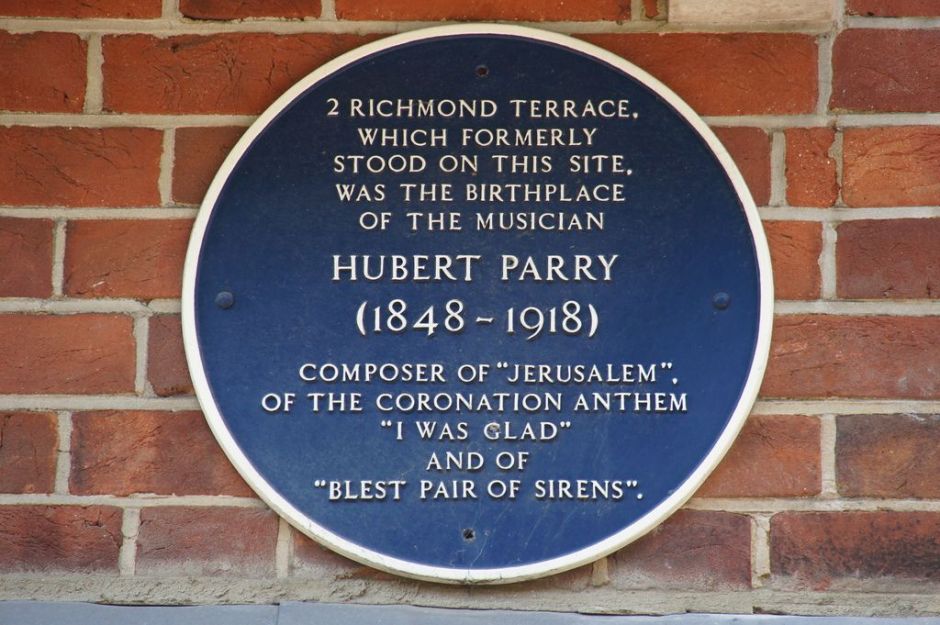
Jerusalem 100

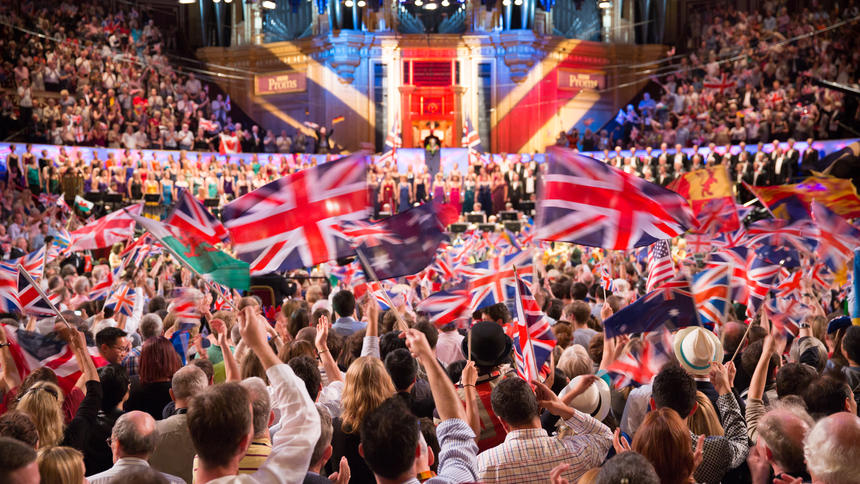
A version of this article first appeared in the programme for the BBC Last Night of the Proms 2016.

          On 10 March 1916 Sir Hubert Parry completed his setting of the opening verses of William Blake’s epic poem Milton. Entitled ‘And did those feet in ancient time’, the work was commissioned by Poet Laureate Robert Bridges on behalf of General Sir Francis Younghusband’s patriotic campaigning organization: ‘Fight for Right’. Parry’s brief was to compose a unison song that an audience would feel compelled to join in and sing, and which would ultimately become an anthem to counteract First World War German propaganda and celebrate Allied victories. Premiered at a Queen’s Hall meeting of ‘Fight for Right’ on 28 March 1916 by a massed choir of 300 volunteers from London-based choral societies under Henry Walford Davis, it was an instant success. By November Parry had orchestrated the organ accompaniment and retitled the work Jerusalem for publication. However, he had always been uneasy with the strong patriotism of ‘Fight for Right’ and in 1917, after turning down further commissions from them to compose more nationalist songs, he wrote to Younghusband to withdraw his support and association with the movement. The nation had already taken to heart the stirring melody of Jerusalem, so Parry was particularly gratified when Millicent Garrett Fawcett of the National Union of Women’s Suffrage Societies sought to perform it at a demonstration concert in the Albert Hall on 13 March 1918:

I wish indeed it might become the Women Voters’ hymn, as you suggest. People seem to enjoy singing it. And having the vote ought to diffuse a good deal of joy too. So they would combine happily.

Parry originally intended the first verse to be sung by a solo female voice so this was a happy union. He granted copyright to the Suffrage cause and its popularity increased as Jerusalem became the anthem of the Women’s Institute.

Sir Edward Elgar’s re-orchestrated and enlarged accompaniment for use at the Leeds Festival in 1922 only increased its appeal and, although Parry’s orchestration remains popular, it is Elgar’s that has become synonymous with the Last Night of the Proms. There have only been two occasions where Jerusalem has appeared earlier in the season. The first was its Prom premiere under the baton of Sir Henry Wood when it was partnered with Parry’s Blest Pair of Sirens to conclude a 1942 Prom of Wood’s own arrangements of Handel and Rameau. The other was in 2009, in a performance by the Ukulele Orchestra of Great Britain, proving the robust nature of its identity. The arrival of Malcolm Sargent in 1947 marked a change in tone for the Last Night and its broadcast on BBC television. He oversaw the introduction of Jerusalem to the programme in 1953, symptomatic of a post-war era of increasingly rambunctious season finales. It has remained a staple of the evening and an expression of Englishness ever since, forming with Elgar’s Pomp and Circumstance March No.1 and Henry Wood’s Fantasia on British Sea Songs one third of the holy trinity of Last Night triumphalist music.

What Parry captured in his anthem of comfort for war-torn England was a vision of spiritual fervour. One obituary summarized Parry’s achievements, plainly evident in Jerusalem: ‘He represented in music the essential sanity of the English genius: its mixture of strength and tenderness, its breadth, its humour, its entire freedom from vacuity and affectation.’ The meaning of Blake’s text has, of course, come under regular scrutiny, some examining the apocryphal image of heaven in England, others the potential sexual or chauvinistic connotations of arrows of desire, and most forming an opinion on the identity of the dark satanic mills; but the musical setting has rarely been criticised. While the words are open to interpretation, Parry’s music has clearly rendered the sentiments decent, God-fearing, and magnificent. When introducing Jerusalem to Walford Davies in 1916 Parry himself pointed to one of the highlights: ‘he put his finger on the note D in the second stanza where the words ‘O clouds unfold’ break his rhythm. I do not think any word passed about it, yet he made it perfectly clear that this was the one note and one moment of the song which he treasured.’ The collective emotion that sweeps through the raised unison voices of a full hall is an honest elevation of collective hope. Little surprise then that it was the only one of the Last Night trio performed immediately after the tragic events of September 11, 2001, and fitting that in its centenary year it has been posited as the national anthem of England. Ultimately Jerusalem is the melody that re-echoes at the end of the Last Night; a sentiment foreseen by Sir Henry:

And as each Last Night of the Season has come round and I have been almost mobbed and my car pushed out into Langham Place by a crowd of jolly young men and girls, I have realised increasingly with the years that music is a great power in England: that there are hundreds of young people who have discovered what their fathers discovered – that the best melodies are in the best music.

              Henry J. Wood, My Life of Music (London: Gollancz, 1938), p.193

Photo credit: Alwyn Ladell http://bit.ly/2clZjvY


=
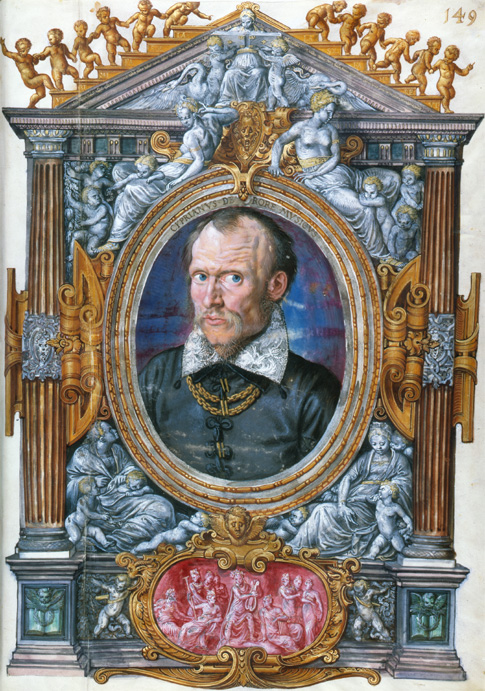
Finding de Rore


Cipriano de Rore. Have you heard of him? He’s not topping the popularity charts, but it’s worth finding his music. And please forgive the terrible pun. I have been surrounded by both the music of de Rore, and posters of Finding Dory for a while and there was an inevitability about the title of this post. As it happens, my daughter and I found her and her family at Toronto’s aquarium earlier this month, so that’s all good.

I’d very much like to wish de Rore a very Happy-500-year-Birthday, but the exact date is a bit sketchy. In fact, a number of details of his life are a bit sketchy. But we know that de Rore was big business in the 16th century and so when Radio 3 wanted to make a show in celebration of him, I decided it was best to let the music do the talking. And wow it can talk. In sound, he’s a link man between Josquin des Prez and Claudio Monteverdi and like fellow Low Countries man Josquin, he wound up in Ferrara at the service of the d’Este family. It turned out that De Rore could turn his hand to writing rather fabulously in both the old academic style (prima pratica), and the new-fangled emotive style (seconda pratica). This made him versatile and garnered him a stellar reputation.

But as a man, he lurks in the shadows of history. After a bit of digging around, and a good read of the Grove article, I fired off some emails to scholars and performers to try to find out some gossip. And there lies a bit of a brick wall. Leading de Rore scholar Professor Katelijne Schiltz, a member of the Musicology Department at the University of Regensburg, is co-author of a new biography of the composer which will be released later this year and her passion for his music is both inspirational and incredibly insightful. She directed me to the most beautiful and monumental codex in the Bavarian State Library (shelfmark Mus.ms. B), which has recently been digitised and contains 26 motets by Cipriano, with illuminations by Hans Mielich (http://daten.digitale-sammlungen.de/~db/0010/bsb00103729/images/). It’s an incredible manuscript, commissioned by Duke Albrecht V of Bavaria. But any exciting, or even boring, anecdotes? No, not really. He quit his job at St Marks, Venice because it was a bit chaotic and the pay was miserable. So we find the man through the music and as you will hear on the Early Music Show, both Katelijne and Dr Stephen Rice of the Brabant Ensemble recommend some stunning works.

Finding de Rore was for me a journey of discovery into the 16th-century world of innovation in polyphonic sacred writing and madrigalian frolics – and a real joining of the dots between better-known composers of the age. There is such beauty and poise in his writing and some cracking recordings from The Tallis Scholars, Huelgas Ensemble, and Brabant Ensemble. But his music is a rich seam waiting to be found by many more musicians. And a word on my pronunciation of Cipriano or Cypriaan. I went for SIPriano rather than CHIPriano, on account of his being Flemish. I’ll have to hope he doesn’t mind if that’s not how he pronounced it, I’m sure he’d be chuffed to little mint balls that we are devoting a show to him. Happy Birthday il divino Cipriano.

De Rore on the Early Music Show  aired on 7 August, to hear the celebration of his life and music download the podcast from the Radio3 website.

IMG_1279


Every-day magic – Musical Walking Sticks


I went to a concert at the Royal Conservatory of Music in Toronto the other week and came across a fine example of one of my fascinations: a walking stick flute. I am a baroque flautist and I use a walking stick, so perhaps it comes as no surprise to hear that I am a fan. We took a photo.

Are walking stick flutes unusual? A little, but once you start spotting them in musical instrument collections and museums (for example, the Horniman Museum, the Metropolitan Museum and the Germanisches Nationalmuseum) it becomes apparent that once upon a time they were all the rage. I’m yet to play one but I can’t think of anything more charming: first it props you up, then when you reach your destination you can play a merry tune. Perfect.

My fascination has been purely whimsical, until recently when I was fortunate to join a team of researchers lead by Dr John Chu investigating a painting that hangs in Tate Britain. Thomas Gainsborough’s Peter Darnell Muilman, Charles Crokatt and William Keable in a Landscape c.1750 depicts three gentlemen in a pastoral setting, and the central figure, Keable, is playing the transverse, baroque, flute. It is an indication of the great popularity of this musical instrument amongst English gentlemen of the mid eighteenth century and my job was to investigate the specifics of the flute that William Keable was playing. A fascinating journey ensued which led me to unpublished manuscripts and a reproduction of the instrument in the portrait – which I play on a recording that will accompany the publication. However, the matter of walking stick flutes came up as soon as I saw this merry trio.

You will see that all three gentlemen in the portrait carry either a flute or walking cane and the way they were arranged immediately caught my eye. The cane in Muilman’s hands (the chap on the far left) almost looks like a flute and prompted me to ask whether it was originally ever intended to be an instrument. I wondered whether the awkward position of his left hand might even suggest a re-working of this detail of the portrait when turning the flute into a walking stick. Whether or not this was the case, a switch would be no coincidence: it has been said that the fashion for walking stick flutes in the eighteenth century ‘permeated masculine leisure’ and the flute could also be found incorporated into swordsticks and – particularly in England – umbrellas.[1]

Walking sticks could in fact contain all manner of curiosities – from telescopes, pedometers, and quill pens with ink and paper, to instruments such as violins, flutes, clarinets, mouth organs, and banjos. Their popularity was seen across all ranks of European gentry as a practical and essential accessory for outdoor pursuits – and was not restricted to the wealthy: ‘Rousseau, who was considered a poor man is said to have purchased forty sticks; and Voltaire, who was not a follower of fashion, owned eighty’.[2] Where a portrait is concerned, being shown playing, rather than posing with the flute is rare, but the walking sticks make the whole scene even more macho. After all, the flute was a man’s instrument at this time. It was considered quite improper for the eighteenth-century lady – she was persuaded that to play it would take away ‘too much of the Juices, which are otherwise more necessarily employ’d, to promote the Appetite, and assist Digestion’.[3]

So there we go. I’ll add a link to the research when it is published on the Tate Research site. In the meantime, I like the idea of surprises inside my walking stick. It’s the kind of every-day magic I aspire to. And I’ll take the risk on my digestive juices.


[1]Ardal Powell, The Flute, New Haven and London 2002, p.144.

[2]Katherine Lester and Bess Viola Oerke, Accessories of Dress: An Illustrated Encyclopaedia, London 2004, p. 396.

[3]John Essex, The Young Ladies Conduct: or, Rules for Education, Under Several Heads, London 1722, p. 85.

Brexit and the Last Night of the Proms – Look Forward by Looking Back

We just celebrated our first Canada Day as a family in Toronto. We dressed up in so much Canadiana we were a vision in red, white, and maple – and out here that’s cool. If you did the same with the Union Flag, I’m not sure you would capture the same tone, certainly not right now. Which leads me to thinking about the most flag-waving event in my British calendar: The Last Night of the Proms. For many years it has trodden a bit of a fine line in nationalistic taste, but I fear for the evening in a post-Brexit referendum year.

The thought of it leaves me feeling a bit queasy, especially as earlier this year I wrote a feature for the night’s Proms Guide on Parry’s Jerusalem. It’s 100 years since Parry set Blake’s poem but I’m not convinced that there’s much ‘green and pleasant’ going on across the land just now.

For consolation I’ve had a look back to Henry Wood’s Last Night. Yes, the whole Prom season was always an intense expression of Englishness (not even necessarily Britishness) – the National Anthem was sung each night. But Wood and co-founder/impresario Robert Newman were passionate about inclusivity, promoting new works and artists from across the continent. Remember too that they stood firm on allowing German repertoire to be performed during both world wars, and included not only the national anthems of the allies throughout the war-time seasons but also hung allied flags around the organ.

The original point of the Last Night was to celebrate the season and bid farewell until the next year. I think we sometimes forget that until the 1927 the entire festival was performed by one orchestra, the Queen’s Hall Orchestra, under one conductor, Henry Wood. When the BBC took over, the BBC Symphony Orchestra served the Proms and eventually Wood was assisted by Basil Cameron and Adrian Boult, but until his death in 1944 the principle was the same: one band, one conductor. The musicians and Prommers became one big musical family and Wood recalled how strong the feeling was on the Last Night as a result:

The Ritual of the Last Prom of the Season is now established. It is a gala night and the young Promenader is determined not to take his music too seriously. Even so, he listens as intently as ever to the first part of the programme. As each leader of the various orchestra sections takes his place he is greeted with a round of applause; even the attendant who opens the lid of the piano is recognized and similarly applauded. The Principal Violin, that night, receives almost as much applause as I do on other nights, whereas my own welcome is something I can never quite get used to, even after all these years. The scenes at the end must strike any one witnessing the for the first time as being unique. (Wood, My Life of Music, p. 191)

So, did they have flag waving and communal singing in those early days? Not exactly. Initially, besides the National Anthem, the Last Night was all about showcasing the soloists in the orchestra, but the party atmosphere really started in 1906 with what Wood described as the ‘sea business’.

I little dreamed when I arranged this item [Fantasy on British Sea Songs]– merely to finish a programme for a special occasion – that the Promenade public would demand its repetition on the last night of the season for ever afterwards, As it had proved a success at the original centenary concert I put it down for the last night of the season following – just to see how it would go. One year I thought we had had enough of it and left it out, but on the Monday morning I received so many letters of protest and disappointment that I resolved never to omit it again. The younger Promenaders thoroughly enjoy their part in it. They stamp their feet in time to the hornpipe – that is until I whip up the orchestra in a fierce accelerando which leaves behind all those whose stamping technique is not of the very first quality. I like to win by two bars, if possible, but sometimes have to be content with a bar and a half. It is good fun, and I enjoy it as much as they. When it comes to the singing of Rule Britannia! We reach a climax that only Britons can reach and I realize I can be nowhere in the world but in my native England. (Wood, My Life of Music, pp. 191-2)

Context is everything. This is what makes me uneasy about the tone this year – I hope that the Last Night can dig deep to its roots and remain a celebration of the music and musicians rather than a spectacle of uneasy nationalism. Jerusalem came much later, which I’ll blog about later this summer.

What of the speech? Wood was uncomfortable with public speaking, and for him the Last Night was all about the music. The first real speech was necessitated by the War. The home of the Promenades, the Queen’s Hall, was bombed in the 1941 (the same night as the Houses of Parliament) and the following year the Proms moved to the Royal Albert Hall. Wood wanted to thank the Prommers for their support and reassure them that the show would go on, but his speech was such a success that Lady Jessie Wood persuaded him to repeat it each year after. Malcolm Sargent was much more keen on the idea and the Last Night speech gained much more momentum during his tenure.

Maybe there is one more thing that could be done. I notice that the Canadians have included the Chorale from Beethoven’s Ninth Symphony, Ode to Joy, in their Almost Last Night of the Proms finale to the London Calling Summer Festival 2016 in Toronto. As the anthem of the European Union, perhaps this might be a fitting addition to the real Last Night programme – at least for the next two years… Then choose your own context: unity, nostalgia, tribute to our membership, or respect for our closest neighbours and friends.

Photo Credits RAH Archive

New York, New York

Every now and again it just so happens that when you stop chasing a dream it comes chasing after you.

I love to educate. I get a kick out of sharing a passion. And if my love of music opens up a new dimension for someone, there is nothing more rewarding. It’s what kept me driven in over a decade of teaching music history at the Royal Academy of Music. So many of the students there don’t relish the academic side of their degree but when one of them starts joining the dots between the history of music performance and how they play now – it’s magic. The thing is you have to lecture a whole theatre of students for a few to be really inspired. I suppose an extension of this was my hankering after opportunities to make radio programmes – something I’ve been chasing for years.

I’ve been lucky to be a guest on numerous BBC shows, as the so-called expert, and my proviso on agreeing to move to Canada was that I could keep this going – whether on regular trips back, or down-the-line. Just after the last moving box was packed, at a point when I felt I was resigning work left, right, and centre, an email landed asking if I fancied making some programmes in New York. I’d been trying so hard to cling onto the things I thought I knew about that I hadn’t dreamt that the BBC would be interested in goings-on across the pond – or in taking a risk on me presenting.

Fast-forward a couple of months and I’m in New York with producer Les Pratt on the trail of the Early Music scene. Zig-zagging across Manhattan to visit the city’s top period performers there was little time to dwell on this being my first time on the interviewing side of the mic.

In advance of the trip I’d asked a few people for their tips on interviewing. ‘Just be yourself’ and ‘enjoy yourself’ were the recurring answers and they seemed such clichés but, in reality, along with ‘keep listening’, they were the best bits of advice. In a funny way, it was a really self-affirming experience. I’ve always been swept away by New York, and I was genuinely absorbed in the world of its Early Music. I’m a baroque flautist so I speak the language of historical performance therefore that felt like the easy bit, but I never imagined the process would feel so wonderfully creative – and I got a real kick out working with Les to choose the music and then shape, and reshape the story. It was like being let loose on a new approach to education in which there are no syllabus restrictions and the only rule is to keep it vibrant and on-message. And then of course came the real trick – of which Les is a master – getting the best chat out of the artists. There is clearly no substitute for time and experience on this and I’ve got lots to learn, but in New York I lucked-out with some fabulously interesting-and-interested musicians who made my job a dream.

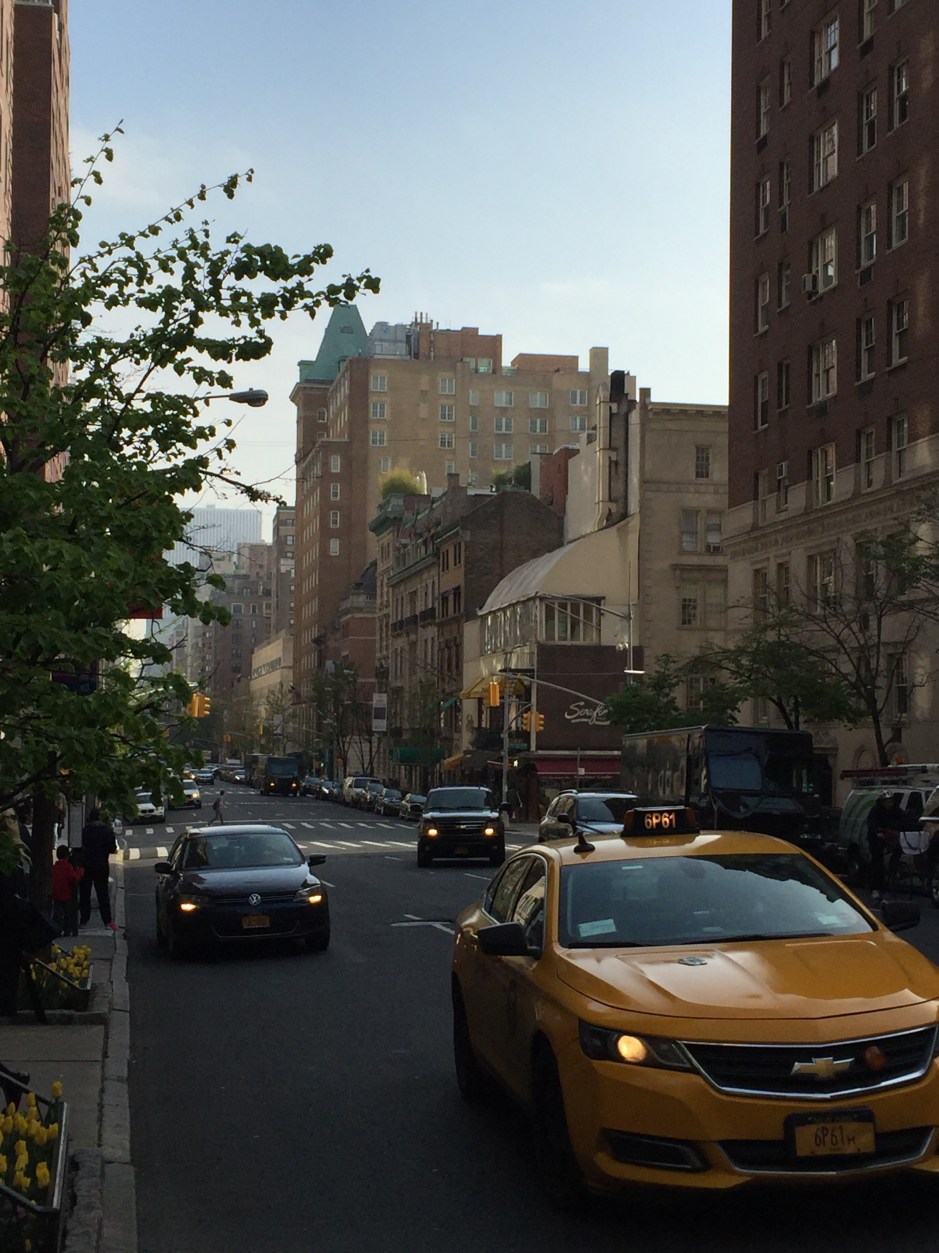
As for the rest, well, besides navigating the subway (once…), we didn’t run out of batteries through extra takes, and there was something pretty exhilarating about writing new links in the back of a yellow cab.

You can hear where the trail led us and who we met on two episodes of the Early Music Show from New York City.

A Day at the Museum: The Frick Collection, New York

On 2 May the Frick Collection in New York was closed to the public. However, BBC Producer Les Pratt and I had the special privilege of being allowed in to make four Lunchtime Concerts and an episode of the Early Music Show for Radio 3. Being let loose in the galleries I was reminded of the film trilogy Night at the Museum in which an ancient curse causes animals and exhibits on display to come to life after hours. Well, there was no ancient curse at work here but the works of art certainly came to life with characters, scenes, and stories that made for an unforgettable day.

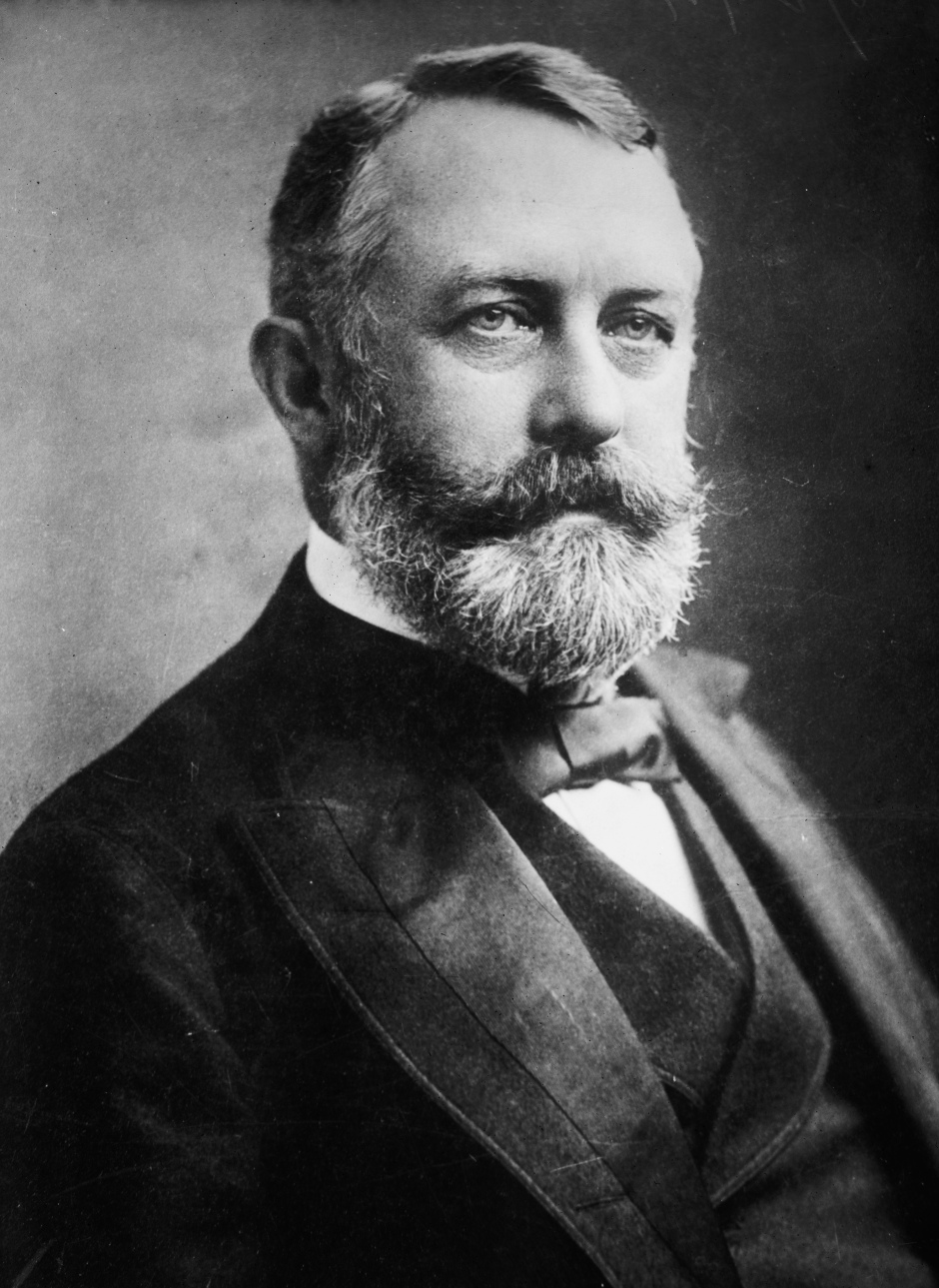
The Frick Collection is a beautiful mansion found to the East of Central Park, just off Fifth Avenue. It was built by Henry Clay Frick, who was one of America’s most successful coke and steel industrialists, and also an avid art collector. On his death in 1919 his wealth of paintings and sculptures, from Titian and Bellini to Degas and Turner, were bequeathed to the public. Naturally there is a magnificent music room and it has staged a regular series of chamber music concerts since 1938.

Joyce Bodig, Frick Concerts Coordinator since 1983, let us into this oasis of tranquility. She is a woman with a keen musical ear and clearly knows how to throw a splendid party in addition to a classy concert. Since its inauguration, the Concert Series has played host to a veritable Who’s Who of the music world and especially the early music world. The Music Room is a vision of grandeur from a bygone time; light fills the damask-papered walls from the elegant central dome. TS Eliot read from his poems here but if walls could talk, or sing or play, we can only imagine the secrets they would tell alongside sounds of performances not recorded. The archives are a treasure trove. My old PhD hat went on immediately as characters I’ve written about in London from the Busch Quartet to Artur Schnabel, and Ralf Kirkpatrick to Isaac Stern, Alfred Brendel, and Wanda Landowska, popped up across the pond.

In a lifetime, how often do you get a private wander around a priceless art collection? More than that, how many times are you accompanied by the Chief Curator who brings each piece to life, giving you insights you would never have otherwise noticed? Peter Jay Sharp Chief Curator Xavier Salomon is a seriously sophisticated man with that enviable skill of captivating an audience with little known details. I was totally hooked. Half the time I forgot I was working I was so absorbed in what he was saying (cue lots of retakes on my part).

Music features heavily throughout the collection and the characters on the walls seemed to demand accompaniment. Take for example, Vermeer’s portrait Girl Interrupted at her Music: is the male figure her teacher or her lover? Xavier counselled us to look to the picture within the picture and let Cupid help you decide. Painted in the year of Purcell’s birth what could be more appropriate than the depiction of Cupid from the Restoration spectacular King Arthur? Cue Anne Sofie Von Otter, accompanied by the lute and harpsichord of Thomas Dunford and Jonathan Cohen.

I’ve always been fascinated by the art that composers might have seen and was part of their cultural aesthetic. For instance, Degas’ intricate work The Rehearsal – a juxtaposing old and young, music and movement, (and the humour of a seemingly dismembered dancer’s leg), was likely known to Debussy as he often visited the home of painter, collector, and patron Henry Lerolle. Debussy is of course associated with the Impressionist school despite it being a term that he didn’t like, but hearing his demanding sonata cello and piano exemplified his artistry in the hands of Nicolas Altstaedt and Alexander Lonquich.

It was as if the portraits on the walls were presiding over the music wherever we went and in an almost Hogwartian fashion oversaw the musical examples. Whether Holbein’s two Thomases: Cromwell and More glowering at each other over the fireplace (Frick as architect of this), or the knowing look of Van Dyke’s portrait of musician, poet, and composer Nicholas Lanier, the concert performances not only of von Otter and Altstaedt., but also the Minetti Quartet and Flanders Recorder Quartet, fuelled the imagination.

And the encounters kept coming. Wanda Landowska was a regular Frick performer between 1943 and 1954 and she always insisted on a huge, and particularly heavy, lamp on stage to light her music. In a moment of mutual discovery during our visit, the lamp was identified in Xavier’s office. The shade had been changed but Joyce had a feeling she knew where it might be. The place is just bursting with musical and artistic history.

Recording the final links in the library, under the watchful eye of Frick’s own portrait, my eyes hungrily scanned the walls for paintings we’d not had time to look at – masterpieces by Turner, Constable, and Gainsborough alongside exquisite works of artists I still need to learn about.

On leaving, a final glance back into stillness of the beautiful inner courtyard garden reaffirmed my overwhelming impression of the place – it could have been just as Frick left it.

Tales of Two Cities

Tafelmusik, Trio Arabica, Alon Nashman

Saturady 21 May, Koerner Hall, Toronto


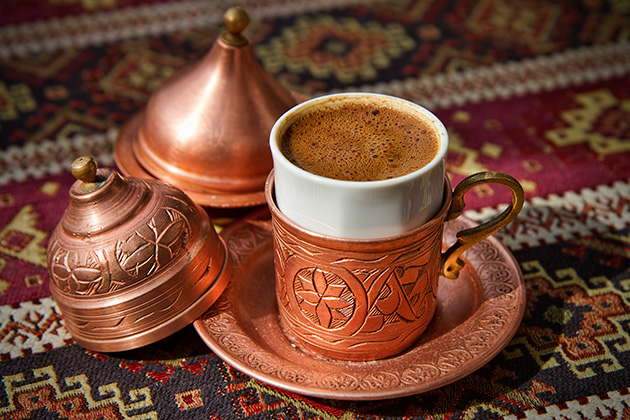
Come into the coffee house

Where divine goodness favours those who share in its bounty.

The sweetness of life, the company of friends, the elegance of rugs –

These make it the abode of the blest.

For coffee is the source of our health,

The fire which consumes our grief,

And the steam which washes away our sorrow!                                

Sixteenth-Century Arabic Poem


There are good concerts, and excellent concerts, and then every now and then there is a concert that is utterly transporting. Tafelmusik’s Tales of Two Cities was one such event.

The latest multimedia brainchild of double-bassist Alison Mackay, links the eighteenth-century cities of Leipzig and Damascus through music, literature, and art. Each at the crossroads of trade routes, the connections between the two turn out to be far-reaching, fundamental, and above all, poetic. Whether through coffee, ceramics, inks, papers, libraries, poets, or musicians, the two cities emerge as hotspots of cultural beauty and the meeting of storytelling, education, and ideas.

In lesser hands, the evening could have been an elaborate powerpoint presentation to accompany a concert – but this could not have been farther from the truth. Mackay’s conception, programme and script was a class production in the hands of Stage Director Marshall Pynkoski, Production Designer Glenn Davidson, and Projections Designer Raha Javanfer. Tafelmusik were joined by Trio Arabica and narrator-actor Alon Nashman – who with Trio Arabica’s Maryem Tollar, wove a tale of enlightenment from coffee houses to courts. Again, the result could have been an awkward fusing of music from east and west, but the gradual crossover of individuals – such as the percussion in Telemann’s Overture in D, or fiddle in Oud Taksim – meant you were holding out for the two bands to unite in the celebratory finale.

Visually, it was stunning. From reconstructed intricate Damascene panelling to detail from coffee mugs, or portraits of characters looking down on the musicians, the backdrop screen seamlessly accompanied the musical programme and subtly coloured the narrative or educated on necessary geographical features. And, judging the pace and tone perfectly, narrator Alon Nashman flitted between biographies, witticisms, and straight-talking information to explain or elaborate on what would otherwise have been an eclectic programme. He brought a sense of smell to the proceedings – from the strength of various coffees, to jasmine, roses, and bitter orange.

But above all the assault on the senses was aural. From the melodies of Leipzig’s coffee houses and the scholars of Telemann and Handel, to the Ambassadors educated by Lully’s music of the French Court, Italian Concertos and scenes from Don Quixote, Tafelmusik were on top form, with solo outings from practically every member of the band. Within these, Trio Arabica inlayed jewels from their repertoire. I found myself holding my breath during Maryem Tollar’s bewitching performance of Sheikh Abul Ela Mohamed’s “Afdihi in Hafidhal Hawa Ow Diya’a”, and the sounds of every level of Damascene society were depicted by the trio, including the astonishing virtuosity of Naghmeh Farahmand’s solo percussion. The music was frankly spellbinding and so constantly evolving that by the end you could almost hear the eastern touches in Bach.

Perhaps the most striking element of the presentation was that every musician on stage performed from memory. For soloists this may be de rigeur but the full programme was a huge undertaking for all the middle parts and accompaniments. I knew in advance that this was their thing and expected it to make a difference to the communication both with each other and the audience, but the overall effect was so profound I was blown away. The freedom that came from ridding the stage of music stands was fundamental. Whether placing musicians around the superb acoustics of Koerner Hall or the flexibility on stage which allowed for myriad formations, or the manner in which they simply milled about whilst playing. Characterization was another unexpected result of memorization as instrumentalists took on the roles of Pisendel or Jewish fiddlers, just as Trio Arabica became Scheherazade or members of a coffee house band.

But most of all, memorization made sense of small-scale phrasing – a moment for a trio, or a middle part melody that jumps out of the texture. And at the point that you felt they were all having a lovely time conversing with each other on stage, you would notice that they were all looking and playing out – they had not lost their audience. To pull this off with the precision they achieved was, without doubt, the direction of Jeanne Lemon. Understated but sparkly, her gestures and glances cast across the stage brought the ensemble to life – and that’s the Tafelmusik way: a family who share musical responsibility, give each other room to shine, but ultimately have an eye and ear on their director. There’s alchemy in there.

Tales of Two Cities was one of those events that you could sit back and enjoy on any level but the culmination brought the focus to the current plight of Syrian refugees. Emphasizing the deep cultural  exchange that comes from welcoming families from the war-torn region reflected the history of migration and was an intense message for today. A blog like this can’t begin to chart the research undertaken (especially by Dr. Anke Scharrahs, Tafelmusik’s scholar in residence for the project) or the layers of meaning portryed. However, you didn’t have to know about period or middle-eastern performance practice or European and Arabic literature to be moved by the core message, the visual beauty, the musical refinement, or the humour of the show. However, I’d bet that most of the audience felt as I did as we left: you wanted to be a part of it and spent the rest of the holiday weekend finding out more.

Tales of Two Cities was developed in a residency at Isabel Bader Centre for the Performing Arts at Queen’s University in Kingston, and in collaboration with the Aga Khan Museum.

http://www.tafelmusik.org/concert-calendar/concert/tales-two-cities-leipzig-damascus-coffee-house


Oh Canada

Canadian Flag
Canadian flag

I’ve been writing some pretty patriotic programme notes this week for the 2016 BBC Proms, however, it’s time to learn the words to the Canadian national anthem. We are going to live there for the next chapter of our lives. It strikes me that a blog is ideal for documenting this experience as I navigate the freelance world of trans-pond music making. I sadly wave goodbye to the Royal Academy of Music where I’ve been a lecturer for 12 years, but plan to keep broadcasting as much as possible on Radio 3 and other lecturing commitments so I’ll be back in the UK on a fairly regular basis. Moving to Toronto will be an amazing adventure for my little family, but musically-speaking I’m excited to get going on my book (more on that to come no doubt), and all those other projects I thought I’d never have time for…

In the immortal words of Gandalf: It’s the deep breath before the plunge. Oh, and if you wondered about the words to the national anthem (I’m reminded of that season 3 West Wing episode, Dead Irish Poets, where Donna Moss finds out she is technically Canadian), then here they are.

O Canada! Our home and native land!
True patriot love in all thy sons command.
With glowing hearts we see thee rise,
The True North strong and free!
From far and wide, O Canada,
We stand on guard for thee.
God keep our land, glorious and free!
O Canada, we stand on guard for thee;
O Canada, we stand on guard for thee.

O Canada! Where pines and maples grow,
Great prairies spread and Lordly rivers flow!
How dear to us thy broad domain,
From East to Western sea!
The land of hope for all who toil,
The true North strong and free!
God keep our land, glorious and free.
O Canada, we stand on guard for thee!

O Canada! Beneath thy shining skies,
May Stalwart sons, and gentle maidens rise.
To keep thee steadfast thro’ the years,
From East to Western sea.
Our own beloved native land,
Our true North strong and free!
God keep our land, glorious and free.
O Canada, we stand on guard for thee!

Ruler supreme, who hearest humble prayer,
Hold our Dominion, in thy loving care.
Help us to find, O God, in thee,
A lasting rich reward.
As waiting for the better day,
We ever stand on guard.
God keep our land, glorious and free.
O Canada, we stand on guard for thee!

Welcome to my blog, a place to reflect on Music

Where does the uttered Music go? was written by Poet Laureate John Masefield to commemorate the life of Sir Henry Wood, the central character in my research. However its title has compelled me to indulge in some more general musings on music. This is a place for me to collect and share all sorts of musical matters which otherwise tend to disappear into the ether: observations, reflections, conversations, and opinions.