
Tafelmusik, Trio Arabica, Alon Nashman
Saturady 21 May, Koerner Hall, Toronto
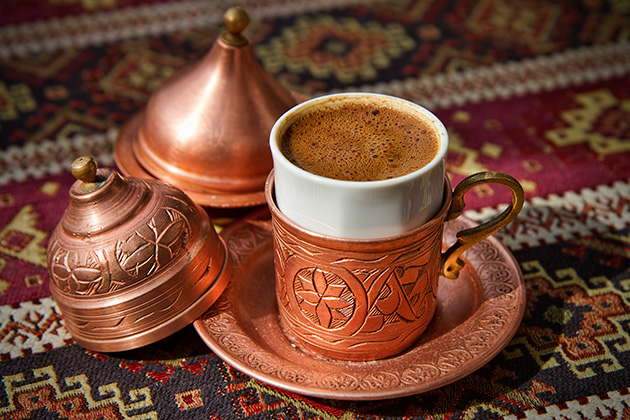
Come into the coffee house
Where divine goodness favours those who share in its bounty.
The sweetness of life, the company of friends, the elegance of rugs –
These make it the abode of the blest.
For coffee is the source of our health,
The fire which consumes our grief,
And the steam which washes away our sorrow!
Sixteenth-Century Arabic Poem
There are good concerts, and excellent concerts, and then every now and then there is a concert that is utterly transporting. Tafelmusik’s Tales of Two Cities was one such event.
The latest multimedia brainchild of double-bassist Alison Mackay, links the eighteenth-century cities of Leipzig and Damascus through music, literature, and art. Each at the crossroads of trade routes, the connections between the two turn out to be far-reaching, fundamental, and above all, poetic. Whether through coffee, ceramics, inks, papers, libraries, poets, or musicians, the two cities emerge as hotspots of cultural beauty and the meeting of storytelling, education, and ideas.
In lesser hands, the evening could have been an elaborate powerpoint presentation to accompany a concert – but this could not have been farther from the truth. Mackay’s conception, programme and script was a class production in the hands of Stage Director Marshall Pynkoski, Production Designer Glenn Davidson, and Projections Designer Raha Javanfer. Tafelmusik were joined by Trio Arabica and narrator-actor Alon Nashman – who with Trio Arabica’s Maryem Tollar, wove a tale of enlightenment from coffee houses to courts. Again, the result could have been an awkward fusing of music from east and west, but the gradual crossover of individuals – such as the percussion in Telemann’s Overture in D, or fiddle in Oud Taksim – meant you were holding out for the two bands to unite in the celebratory finale.
Visually, it was stunning. From reconstructed intricate Damascene panelling to detail from coffee mugs, or portraits of characters looking down on the musicians, the backdrop screen seamlessly accompanied the musical programme and subtly coloured the narrative or educated on necessary geographical features. And, judging the pace and tone perfectly, narrator Alon Nashman flitted between biographies, witticisms, and straight-talking information to explain or elaborate on what would otherwise have been an eclectic programme. He brought a sense of smell to the proceedings – from the strength of various coffees, to jasmine, roses, and bitter orange.
But above all the assault on the senses was aural. From the melodies of Leipzig’s coffee houses and the scholars of Telemann and Handel, to the Ambassadors educated by Lully’s music of the French Court, Italian Concertos and scenes from Don Quixote, Tafelmusik were on top form, with solo outings from practically every member of the band. Within these, Trio Arabica inlayed jewels from their repertoire. I found myself holding my breath during Maryem Tollar’s bewitching performance of Sheikh Abul Ela Mohamed’s “Afdihi in Hafidhal Hawa Ow Diya’a”, and the sounds of every level of Damascene society were depicted by the trio, including the astonishing virtuosity of Naghmeh Farahmand’s solo percussion. The music was frankly spellbinding and so constantly evolving that by the end you could almost hear the eastern touches in Bach.
Perhaps the most striking element of the presentation was that every musician on stage performed from memory. For soloists this may be de rigeur but the full programme was a huge undertaking for all the middle parts and accompaniments. I knew in advance that this was their thing and expected it to make a difference to the communication both with each other and the audience, but the overall effect was so profound I was blown away. The freedom that came from ridding the stage of music stands was fundamental. Whether placing musicians around the superb acoustics of Koerner Hall or the flexibility on stage which allowed for myriad formations, or the manner in which they simply milled about whilst playing. Characterization was another unexpected result of memorization as instrumentalists took on the roles of Pisendel or Jewish fiddlers, just as Trio Arabica became Scheherazade or members of a coffee house band.
But most of all, memorization made sense of small-scale phrasing – a moment for a trio, or a middle part melody that jumps out of the texture. And at the point that you felt they were all having a lovely time conversing with each other on stage, you would notice that they were all looking and playing out – they had not lost their audience. To pull this off with the precision they achieved was, without doubt, the direction of Jeanne Lemon. Understated but sparkly, her gestures and glances cast across the stage brought the ensemble to life – and that’s the Tafelmusik way: a family who share musical responsibility, give each other room to shine, but ultimately have an eye and ear on their director. There’s alchemy in there.
Tales of Two Cities was one of those events that you could sit back and enjoy on any level but the culmination brought the focus to the current plight of Syrian refugees. Emphasizing the deep cultural exchange that comes from welcoming families from the war-torn region reflected the history of migration and was an intense message for today. A blog like this can’t begin to chart the research undertaken (especially by Dr. Anke Scharrahs, Tafelmusik’s scholar in residence for the project) or the layers of meaning portryed. However, you didn’t have to know about period or middle-eastern performance practice or European and Arabic literature to be moved by the core message, the visual beauty, the musical refinement, or the humour of the show. However, I’d bet that most of the audience felt as I did as we left: you wanted to be a part of it and spent the rest of the holiday weekend finding out more.
Tales of Two Cities was developed in a residency at Isabel Bader Centre for the Performing Arts at Queen’s University in Kingston, and in collaboration with the Aga Khan Museum.
http://www.tafelmusik.org/concert-calendar/concert/tales-two-cities-leipzig-damascus-coffee-house
 Where does the uttered music go?